

iPhone 18 Pro Teardown: 2nm Chip, In-House Modem, Variable Aperture — Apple Has Once Again Replaced a Set of Core Components
01 Finally, 2nm! Emergency Teardown of the iPhone 18 Pro
Apple rolled out a wave of new products in the fall of 2026. In addition, Apple’s first foldable phone, the iPhone Duo, is set to go on sale in October of the same year.
On September 18, 2026, alongside the iPhone 18 Pro series—including the Pro and Pro Max—Apple also launched the 12th-generation smartwatch, Apple Watch Series 12, and the fifth-generation wireless earbuds, AirPods 5. As for the standard iPhone 18, it is expected to arrive a little later.
The iPhone 18 Pro series is powered by Apple’s latest A20 Pro processor, manufactured using TSMC’s 2nm process.
Looking back, 2026 has effectively become the starting point for 2nm processors to officially enter the commercial market.
In March of this year, Samsung Electronics’ Exynos 2600, manufactured using a 2nm process, had already launched in the Galaxy S26, although that model was not sold in Japan.
By spring, laptops equipped with Intel’s third-generation Core Ultra also began hitting the market one after another, with their CPUs manufactured using Intel 18A, a process equivalent to the 2nm class.
Therefore, 2026 can be said to have officially opened the curtain on the commercialization of 2nm processors.
Compared with Samsung and other manufacturers, Apple entered the 2nm market about half a year later. But starting with Apple’s products, the market is set to see a concentrated wave of TSMC 2nm chip launches through the end of the year.
For example, Qualcomm’s next-generation flagship processors, the Snapdragon 8 Elite Gen6 / 8 Elite Extreme Gen6, as well as MediaTek’s Dimensity 9600 Pro, are all expected to be manufactured using TSMC’s 2nm process. Once we obtain these products, we also plan to conduct teardowns and analyses.
As in previous years, Apple’s fall lineup is often not just a single product update, but a whole batch of products launched together.
On September 22, Apple also launched the Mac mini powered by the M6 processor, and the M6 is likewise manufactured using TSMC’s 2nm process. In addition, the Mac Studio equipped with the M5 Ultra also went on sale at the same time. Nearly all of them come with all-new processors.
02 What does it look like inside after removing the screen?
Figure 1 shows the first step in tearing down the iPhone 18 Pro—removing the display.
The display removal method for the iPhone 18 Pro is basically the same as that of previous-generation models.
There are two retaining screws at the bottom of the phone. After removing the screws, you can begin removing the display. Aside from the fact that screws are used for fastening, the entire display removal process is essentially similar to that of most Android smartphones.
After the display is removed, a metal plate can be seen in the center, as shown in Figure 1, with its surface entirely covered by a black film.
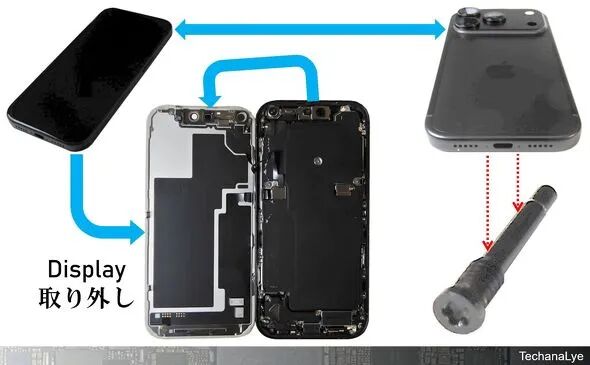
Figure 1: iPhone 18 Pro teardown step 1—removing the display. Source: TechanaLye Report.
Figure 2 shows the situation after the internal metal plate has been removed.
This metal plate is secured inside the chassis with screws, so once the screws are removed, the entire plate can be taken off fairly easily.
Integrated into the metal plate is the cooling structure Apple began using with the iPhone 17 Pro—a vapor chamber, also known as a VC heat spreader.
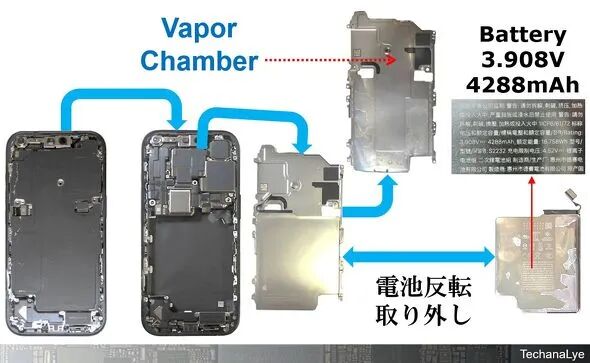
Figure 2: Internal metal plate and battery. Source: TechanaLye Report.
On the other side of the metal plate is the battery.
Since this metal plate itself is relatively easy to remove, structurally speaking, when replacing the battery, it can be handled together with the plate, making battery replacement extremely easy.
The battery of the iPhone 18 Pro has the same shape and dimensions as that of the iPhone 17 Pro, but both its voltage and capacity have increased slightly.
Specifically, the battery specifications of the iPhone 17 Pro are: 3.894V / 4252mAh.
For the iPhone 18 Pro, they rise to: 3.908V / 4288mAh.
Overall, the change is not particularly significant.
03: A Look at What’s Changed in the Latest Camera
Figure 3 shows the wide-angle main camera of the iPhone 18 Pro.
The iPhone 18 Pro features three rear cameras: a wide-angle camera, an ultra-wide camera, and a periscope telephoto camera.
All three cameras use 48-megapixel CMOS image sensors manufactured by Sony.
The overall configuration and specifications are basically the same as those of the iPhone 17 Pro, but the wide-angle main camera adds a new feature—aperture adjustment.
This is the first time an Apple product has adopted an adjustable aperture design.
In fact, since around 2024, variable aperture has gradually become a common feature on some Android flagship smartphones, and this time Apple has officially introduced it as well.
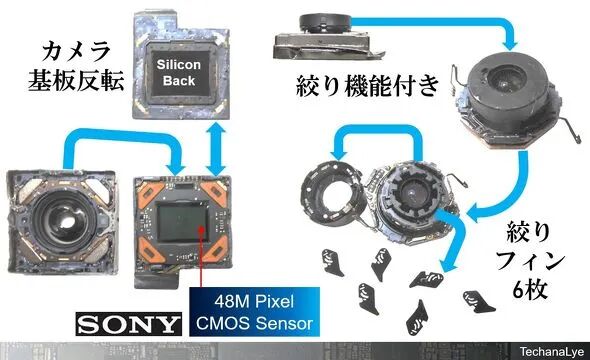
Figure 3: Wide-angle main camera adds aperture adjustment for the first time. Source: TechanaLye Report.
Its aperture is made up of multiple thin blades. Coils and magnets are arranged around the lens, and an electromagnetic structure drives these blades to adjust the aperture size.
The overall structure is basically the same as the variable aperture solutions used in Android phones.
As for the ultra-wide and periscope telephoto cameras, their structures remain basically the same as those on the iPhone 17 Pro.
The overall structure of the front camera and Face ID-related modules has not changed noticeably either, but the position of the infrared camera within them has been adjusted, moving from its original central position to the left edge.
04: Communications Mainboard Equipped with Apple’s Latest In-House Baseband
Figure 4 shows the internal mainboard of the iPhone 18 Pro.
Neither the size of the mainboard nor the locations of the main functional areas have changed noticeably compared with the iPhone 17 Pro, with only some minor details adjusted.
The entire mainboard consists of two boards and is divided by function into a processor mainboard and a communications mainboard.
The processor mainboard is on the left, and the communications mainboard is on the right.
The processor mainboard mainly carries components such as the A20 Pro processor, memory chips, power management ICs, and a security controller.
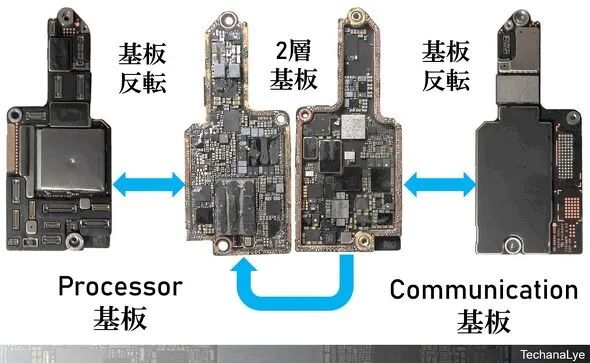
Figure 4: The mainboard is still divided into two parts: the processor board and the communication board. Source: TechanaLye Report.
The communications mainboard, meanwhile, integrates a large number of wireless communication and peripheral functions.
These include a baseband chipset supporting 4G/5G wide-area mobile communications and GNSS functionality, as well as UWB ultra-wideband chips, Wi-Fi and Bluetooth chips, NFC, RF power amplifiers, audio chips, and an IMU inertial measurement unit.
In other words, apart from components related to the core processor, the vast majority of communication and peripheral chips are concentrated on the communications mainboard side.
Both mainboards also adopt fairly thorough designs for heat dissipation and resistance to noise interference.
Figure 5 shows the communications mainboard.
On the back of the mainboard, a large number of power ICs, power amplifiers, and other components can be seen.
The most noteworthy chip here is the 4G/5G baseband.
The iPhone 18 Pro uses Apple’s own Apple C2 baseband chipset.
The iPhone 17 Pro, by contrast, still used a Qualcomm baseband, making this the main part of the entire iPhone 18 Pro where the supplier has changed noticeably.
Apart from the baseband chipset, other major components basically continue to use the same suppliers as the previous generation.
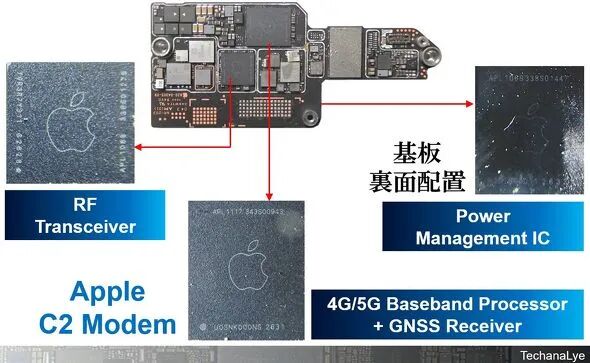
Figure 5: Communication motherboard featuring Apple's in-house C2 baseband. Source: TechanaLye Report.
In the ultra-thin iPhone Air model Apple launched in 2025, it featured Apple’s self-developed C1 baseband for the first time.
The C2 used in the iPhone 18 Pro is Apple’s second-generation in-house baseband following the C1.
In particular, the baseband processor has been upgraded from the C1 to the C2.
However, the RF transceiver chip shown on the left side of Figure 5 has not been replaced; it still uses the same chip from the C1 era, now paired with the new C2 baseband processor.
05: What Does the TSMC 2nm A20 Pro Processor Mainboard Look Like?
Figure 6 shows the processor mainboard of the iPhone 18 Pro.
Almost at the very center of the mainboard, the A20 Pro processor can be seen.
On the back of the mainboard are mainly power management ICs and memory chips.
Inside the A20 Pro package, chips such as DRAM and the processor die are integrated, and it is packaged in the form of WMCM (Wafer Level Multi Chip Module).
We are currently still decapping the chip, so detailed information about the inside of the A20 Pro will be further introduced in a later report.
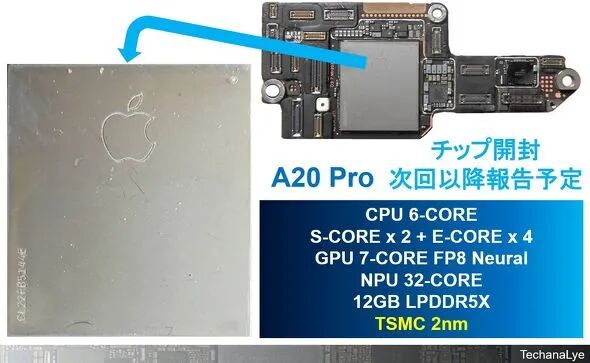
Figure 6: The A20 Pro is located at the center of the processor motherboard. Source: TechanaLye Report.
Before the A19 Pro, Apple processors had always used a layout in which the processor die and the DRAM die were stacked vertically.
But with the A20 Pro, this structure changed. The processor die and DRAM are now arranged side by side horizontally.
The A19 Pro was manufactured using a 3nm process, while the A20 Pro has been upgraded to 2nm.
As the process node further shrinks, the number of CPU cores, core types, and other aspects have also changed considerably.
However, there is already a wealth of information online about the A20 Pro’s specifications and architecture, so there is little point in repeating the same content again. Therefore, we will not elaborate further here.
06 It has been over 7,000 days since the launch of the original iPhone, yet revisiting it remains awe-inspiring.
An overall comparison was made between the iPhone 17 Pro and the iPhone 18 Pro.
The two phones are basically identical in appearance and dimensions, and their internal structures and component layouts are also very similar.
The more noticeable internal changes are mainly concentrated in a few areas, such as the vapor chamber structure and the position of the infrared camera.
The disassembly methods for the two phones are also almost the same, and even the tools used are identical.
Although the battery specifications show some numerical changes, the overall difference is not significant.
The camera layout and external dimensions are likewise basically the same.
Of course, there are still some specific differences between the two generations. For example, the iPhone 18 Pro adds a variable aperture, and the CMOS image sensors have also been adjusted. Overall, however, the iPhone 18 Pro largely continues the overall device structure established by the iPhone 17 Pro.
Previously, when Apple moved from the iPhone 16 Pro to the iPhone 17 Pro, it made fairly significant adjustments to the internal structure and component configuration.
So if the iPhone 16 Pro → iPhone 17 Pro transition is seen as a “full generational overhaul,” then the iPhone 17 Pro → iPhone 18 Pro transition is closer to a “minor refresh.”
That said, the upgrades to core chips such as the processor are still quite substantial.
Table 2 shows the changes in processors and baseband chipsets from the iPhone Air to the iPhone 18 Pro. This is also presented here as a summary of this report.
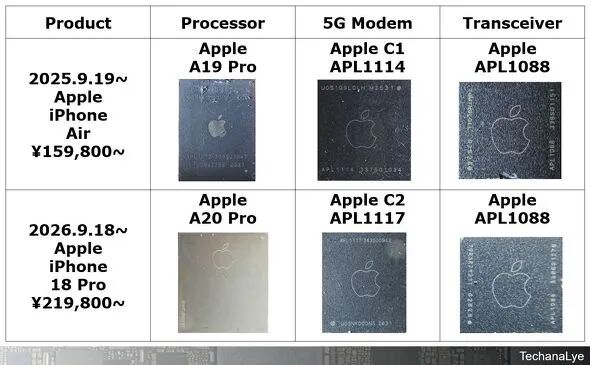
Table 2: Comparison of processors and baseband chips for iPhone Air/iPhone 18 Pro. Source: TechanaLye Report.
Table 3 summarizes the changes in the rear of the phone, internal structure, and mainboard appearance across successive iPhone generations since 2018, mainly Pro models.
In fact, we also have a complete set of photos on hand starting from the original iPhone in 2007, but due to space limitations, not all of them are shown here.
The comparison also makes it very clear that the overall structures of the iPhone 18 Pro and iPhone 17 Pro are indeed very similar.
Looking at products from different generations together like this reveals many interesting changes.
What the next-generation iPhone will look like in 2027 is already something to look forward to.
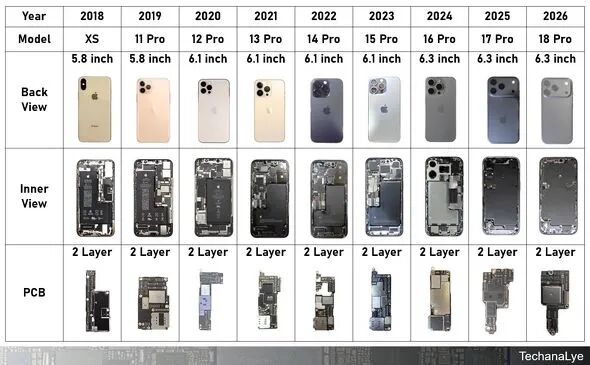
Table 3: Evolution from the 2018 iPhone XS to the iPhone 18 Pro. Source: TechanaLye Report.
A comparison between the first-generation iPhone 2G, model A1203, released in 2007, and the latest iPhone 18 Pro.
The iPhone has now become a product line that has lasted for more than 7,000 days.
Over these 7,000-plus days, both semiconductors and finished devices have undergone an astonishing evolution.
Going forward, we also hope to continue observing this product line and see what it will become when the iPhone approaches 10,000 days.


 Whatsapp
 Email
Email Skype
Skype