

Storage prices are soaring, and these chip distributors are quietly reaping the benefits.
Note: The following analysis is based on a sample of representative chip distributors and is for reference only.
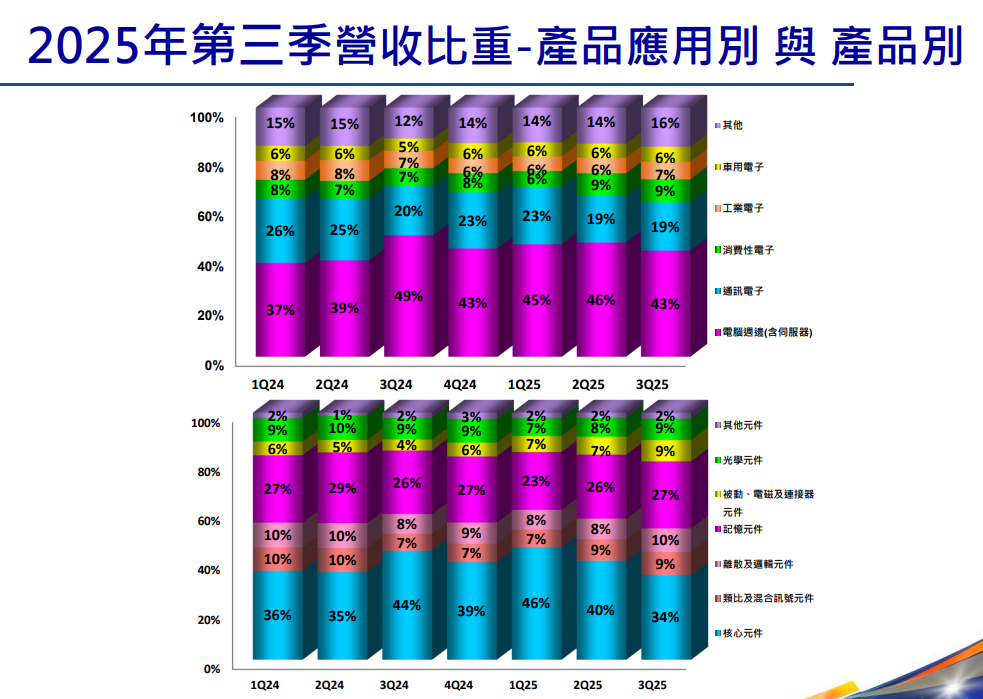
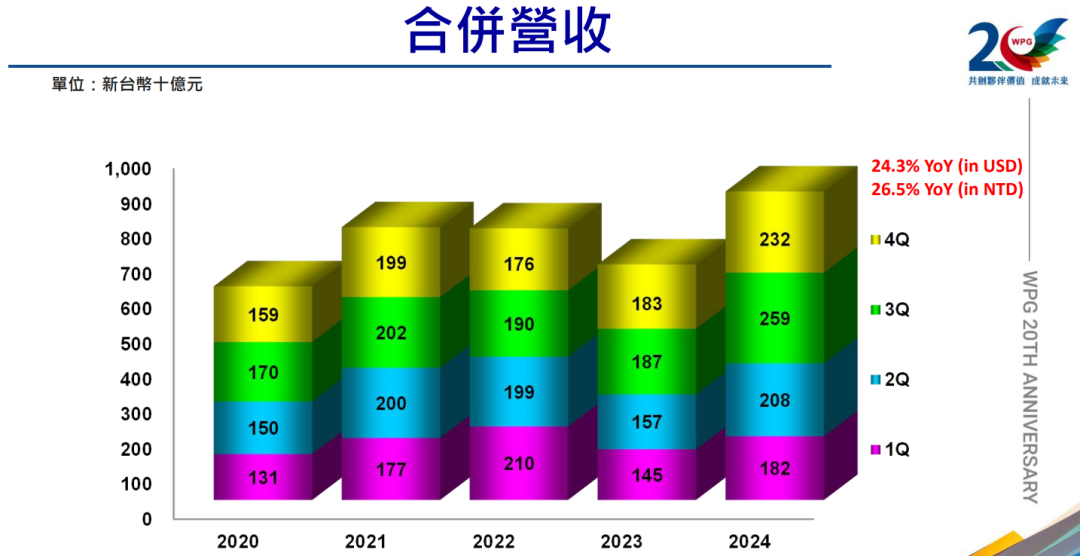
WPG Holdings (Global Leader): Revenue from AI Server Applications Soars
WPG Holdings' Top Three Product Categories: Application-Specific Semiconductors (approximately 26%), Application-Specific Standard Products - Wireless Connectivity (approximately 19%), and Application-Specific Standard Products - Wired Connectivity (approximately 16%).
In 2024, WPG Holdings' revenue from memory products reached approximately NT$409.46 billion, accounting for about 4.3% of its total revenue. While this proportion is relatively low, given WPG Holdings' position as a global leader in chip distribution, even this segment—equivalent to approximately RMB 9.164 billion—represents a substantial business scale.
WPG's third-quarter revenue reached NT$3,289 billion, representing a year-on-year increase of 25.9% and a quarter-on-quarter growth of 26.8%. This performance was primarily
driven by robust shipment momentum in AI application-related products, coupled with the smartphone industry entering its traditional peak season, which led to a noticeable
seasonal recovery in demand, thereby boosting overall operational results. The revenue contribution from data center and server segments at WPG saw a significant increase in the
third quarter, rising sharply from 36% in the second quarter to 48%. Revenue in this segment grew by 69% quarter-on-quarter and 75% year-on-year, highlighting the strong
demand for AI-related applications.
WPG Holdings' cumulative revenue for the first 11 months of this year reached NT$10.793 trillion, a year-on-year increase of 24.98%, surpassing the trillion-yuan mark for the first time. Analysts pointed out that the key drivers behind this rapid revenue growth include WPG's acquisition of Future Electronics last year, which expanded its business reach into Europe and America, as well as strong shipments in automotive and communication components. Additionally, the demand for AI-related semiconductors has further boosted growth in data centers and communication equipment.
WPG Holdings: Benefiting from AI demand and storage upgrades, etc.
WT Microelectronics: Memory products account for approximately 25%-30% of its portfolio, second only to the "core components" category. In 2024, WT Microelectronics’ revenue from memory products reached approximately NT$239.44 billion, equivalent to around RMB 53.563 billion.
Driven by the rapid development of generative AI, which has spurred demand for traditional and AI servers, power supplies, PCs, laptops, memory upgrades, and electronic components, WT Microelectronics achieved a record high revenue of NT$78.64 billion in November 2025, marking a 7.37% year-on-year increase compared to NT$73.25 billion in the same period last year. For the first 11 months of this year, WT Microelectronics’ cumulative revenue totaled approximately NT$905.783 billion, reflecting a year-on-year growth of 13.65%.
Arrow Electronics and Avnet: Extensive Coverage of Memory Brands
Arrow Electronics and Avnet lead the industry in the breadth of their memory product portfolios, encompassing nearly all major global memory manufacturers. Both companies have dedicated sections on their official websites specifically for memory product brands. However, neither discloses the exact revenue contribution of their memory product lines or detailed changes in demand for memory-related products this year.
Arrow Electronics represents a wide range of memory-related manufacturers, including Infineon, Micron, ISSI, Virtium, Kingston, Kioxia, Winbond, PNY, Samsung, SanDisk, ADATA, and others. In the third quarter of 2025, Arrow Electronics reported sales of $7.713 billion, a year-on-year increase of 13% and a quarter-on-quarter growth of 1.7%. Arrow noted that the company is in the early stages of a moderate cyclical recovery.

Arrow Electronics' Memory Supplier Brands (Partial), Source: Arrow Official Website
Avnet represents 43 memory brands including Samsung, Micron, and Kioxia. In its third quarter of this year (FY26 Q1, ended September 27, 2025), Avnet's sales reached $5.899 billion, marking a year-on-year increase of 5.3% and a quarter-on-quarter growth of 5%. The company remains optimistic about the increasingly positive signs of recovery.
Domestic Leader SECO: AI-Driven Growth in Memory Chip Business Performance
Memory products serve as SECO’s largest core business segment, accounting for over 40% of its total revenue.
In 2024, SECO’s core business covered five major categories:
Memory products (~42.53% of total revenue, +134.32% YoY)
Processors (~30.78%)
Analog devices (10.16%)
RF & wireless connectivity components (6.13%)
Others (~10.40%)
In its Q3 2025 financial report, SECO stated that the rapid iteration of artificial intelligence (AI) technologies during the reporting period had spurred surging demand across relevant application sectors. This, in turn, drove the revenue growth of the company’s electronic components including processors and supporting memory chips. For the first three quarters of 2025, SECO recorded a total operating revenue of RMB 50.598 billion, representing a year-on-year (YoY) increase of 33.29%.
After posting consecutive revenue growth from 2019 to 2022, SECO saw a marked decline in 2023. However, fueled by the recovery of market demand and rising demand in the AI sector in 2024, the company resumed its growth trajectory with a nearly 41% rebound. Its annual revenue hit a new high of RMB 48.639 billion, surpassing the 2022 level. Among this, the revenue from the memory products business reached RMB 20.685 billion, representing a year-on-year surge of 134.32%.
Nevertheless, SECO’s net profit registered barely any growth in 2024 (+0.18%). In its annual report, the company indicated that this was attributable to two key factors: the persistent pressure on gross profit margins across all links of the electronic information industry chain, and the strong market demand for memory products—a segment with relatively low gross profit margins. These factors combined resulted in a high revenue share of the company’s low-margin businesses.
Samsung's Supplier Supremacy: Sustained Demand for AI Server Applications and High-End Storage Solutions
Samsung's key distributor, Supreme Electronics, derives 67% of its revenue from memory products, comprising 43% from DRAM and 24% from NAND Flash. While mobile applications account for approximately 40% of its total revenue, servers contribute about 30%. Notably, AI servers make up a significant 80% of its server-related business.
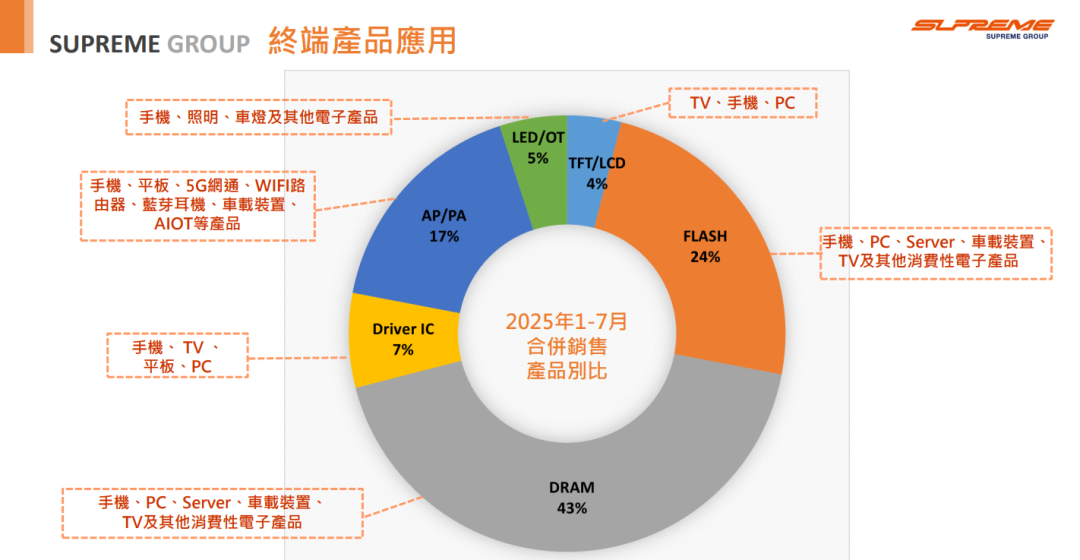
Source: Zhishang Electronics
According to Taiwanese media reports, recent sharp increases in memory chip prices have boosted Supreme Electronics' November revenue performance. The company's consolidated revenue for November reached NT$25.367 billion, benefiting from the strong memory market conditions and setting a new historical monthly high. This represents a month-on-month increase of 44% and a significant year-on-year surge of 81%. Supreme's cumulative consolidated revenue for the first 11 months of this year was NT$199.226 billion, marking a year-on-year decrease of 7.92%. This shows a noticeable narrowing compared to the previous double-digit year-on-year decline.
In the first three quarters of this year, Supreme's revenue was NT$156.194 billion, a year-on-year decrease of 16.1%. Industry analysts point out that although the overall scale remains lower than the same period last year, if the prices of its distributed memory products continue to rise, it will help improve the company's revenue structure and product mix, laying the groundwork for future performance recovery. Looking ahead, with the sustained demand for AI server applications and high-end storage, analysts expect its fourth-quarter business momentum to stabilize.
The company stated that in the first half of this year, its operations were under pressure due to factors such as customers destocking, tight supply from its distribution lines, and limited shipments of HBM products from its partnered manufacturers. However, as the market conditions for DRAM and NAND Flash strengthen and signs of recovering end-demand emerge, orders related to AI servers and data centers are expected to gradually increase.
Since 2016, Supreme Electronics has delivered notable performance in 2021 and 2024, with revenues reaching NT$208.73 billion and NT$237.01 billion, respectively. In particular, 2024 saw a remarkable year-on-year increase of 55.7%, setting a new historical revenue record for the company.
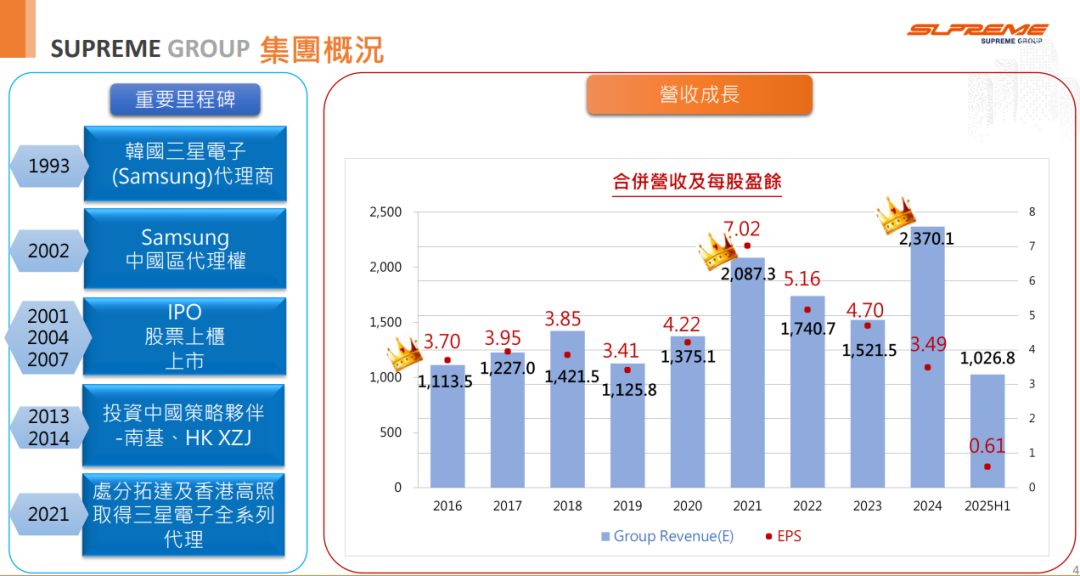
Source: Supreme Electronics' Investor Conference in September 2025
Shannon Core Technology: SK Hynix Agent Sees Strong Performance Amid Surging Stock Price
Shannon Core Technology's Storage Products Constitute Approximately 70% of Its Distribution Business.
The company's primary offerings include data storage devices supplied by SK Hynix and main control chips supplied by MediaTek.
SK Hynix has long been its largest supplier, accounting for over 50% of the company's sales revenue.
Shannon Core Technology has demonstrated remarkable performance growth, with revenue growth rates exceeding 100% in Q3 2024, Q4 2024, and Q1 2025. Notably, the growth rate reached as high as 243.33% in Q1 2025. Driven by this rapid expansion, the company has already ranked among the global top 10 semiconductor distributors by revenue in the first three quarters of this year.
Since the third quarter of this year, propelled by the outbreak of the storage super-cycle, Shannon Core Technology's stock price has skyrocketed like a rocket, surging sixfold within just a few months. The company's revenue for the first, second, and third quarters of this year was 7.906 billion yuan, 9.217 billion yuan, and 9.276 billion yuan, respectively, while net profit attributable to shareholders was 0.017 billion yuan, 0.140 billion yuan, and 0.202 billion yuan, respectively, indicating an improvement in profitability.
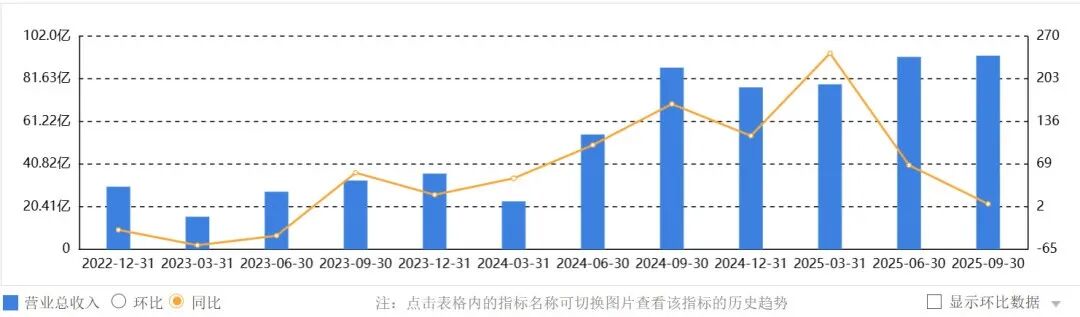
Since officially transitioning from traditional manufacturing to electronic component distribution in 2021, Shannon Core Technology has embarked on a trajectory of rapid growth. Its revenue surged from less than 300 million yuan to 9.206 billion yuan, and its distribution business continued to scale significantly thereafter. In 2024, the company's revenue reached 24.271 billion yuan, marking a year-on-year increase of 115.4%, with distribution accounting for over 98% of the total. By the first three quarters of 2025, its revenue had already hit 26.4 billion yuan, surpassing the full-year figure for 2024.
In 2024, the company further obtained AMD distribution authorization, strengthening its capability to supply electronic components such as data storage devices, control chips, and modules. Its client base now covers cloud service providers and leading ODM manufacturers. Shannon Core Technology has also begun extending its operations upstream from distribution. In 2023, the company, in partnership with SK Hynix and Dapu Microelectronics, co-founded Hapu Storage, venturing into the design of enterprise-grade SSDs and DDR5 modules.
Shenzhen Huaqiang: Shipment Value of Storage Products Surges in First Three Quarters
Shenzhen Huaqiang's main business consists of three segments: the Electronic Components Trading Division (96.28%), the Electronic Components Trading Services Division (2.55%), and the Business Expansion and Exploration Division (1.17%).
Business types of Shenzhen Huaqiang Electronic Components Trading and Service Platform, Source: 2024 Annual Report
In the first three quarters of 2025, the company achieved an operating revenue of 17.658 billion yuan, representing a year-on-year increase of 8.46%. The net profit attributable to shareholders of the listed company reached 361 million yuan, up 35.62% year-on-year.
During institutional research meetings, Shenzhen Huaqiang stated that the total shipment value of its memory product line saw significant year-on-year growth in the first three quarters of this year. The memory sector is a business area the company continues to develop and expand. Shenzhen Huaqiang serves as a key distributor for several major memory manufacturers, including Longsys, GigaDevice, Union Memory, Ramaxel, Silicon Motion, ADATA, and Chanyi International.
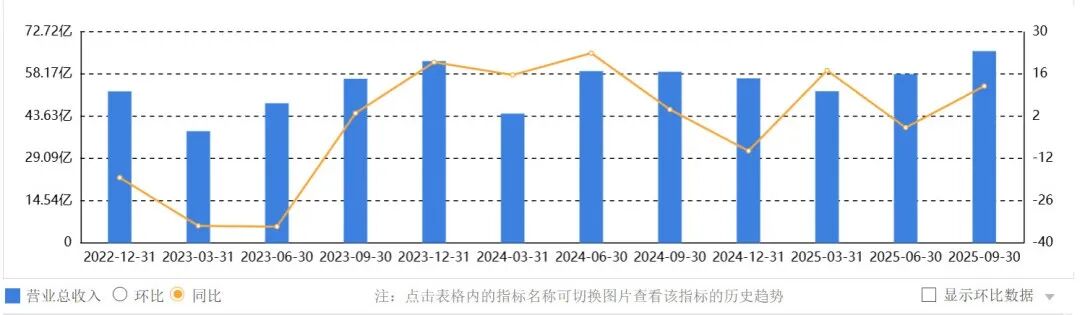
In its financial report, the company stated that the performance growth in the first three quarters of this year was primarily driven by deepening collaborations with key product lines and customers, actively expanding market presence, vigorously promoting leading domestic product lines such as HiSilicon, Unisoc, and Longsys, as well as overseas premium product lines including Murata, Novatek, and Silicon Motion. By intensively exploring opportunities in consumer electronics, automotive, new energy, data centers, and memory sectors, the company achieved dual growth in the scale of both domestic and overseas product line operations. Additionally, contributions from the "Huaqiang Science and Innovation Plaza" project and optimized domestic and international financing structures led to reduced costs.
From 2015 to 2022, the company's revenue grew from 2.034 billion yuan to 23.941 billion yuan, while net profit increased from 376 million yuan to 952 million yuan. In 2023, revenue declined to 20.594 billion yuan, down 13.98% year-on-year, and net profit dropped to 467 million yuan, a decrease of 50.93% year-on-year. In 2024, the declining trend in net profit continued, with revenue reaching 21.954 billion yuan, a year-on-year increase of 6.6%, while net profit fell to 213 million yuan, down 54.43% year-on-year.
Shangluo Electronics: Benefiting from AI Demand and the Memory Market Boom
Shangluo Electronics primarily operates with two product categories: passive electronic components, accounting for 42.93% of its business, and active and other electronic components, comprising 57.06%.
In September, the company stated on an investor interaction platform that it currently supplies electronic components such as memory chips and power chips to data centers and server clients. During the same month, the Secretary of the Board responded to investor inquiries, noting that the company has maintained partnerships with leading domestic memory manufacturers like GigaDevice and ChangXin Memory Technologies for over five years, and this year successfully secured distribution authorization from Kioxia.
Since its establishment, Shangluo Electronics has obtained distribution authorizations from more than 100 renowned domestic and international manufacturers, including TDK, Samsung Electro-Mechanics, Yageo, Sunlord Electronics, TE Connectivity, ChangXin Memory Technologies, Leshan Radio, GigaDevice, Nexperia, and SEMIKRON.
In the first three quarters of 2025, Shangluo Electronics reported operating revenue of 6.189 billion yuan, a year-on-year increase of 32.8%, and net profit attributable to shareholders of 141 million yuan, a surge of 164.32% compared to the same period last year. Specifically, in the third quarter of 2025, operating revenue reached 2.253 billion yuan, up 26.55% year-on-year.
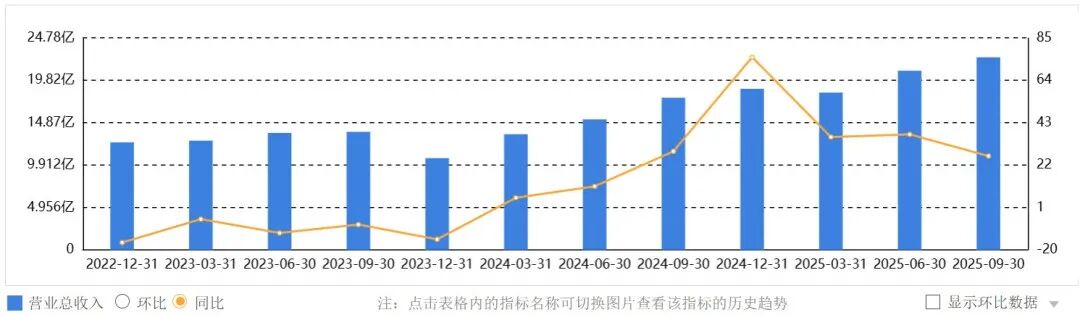
In the first half of this year, Shangluo Electronics' revenue increased significantly by 36.66% year-on-year. The company stated in its financial report that this performance growth was primarily driven by the implementation of its forward-looking strategic layout in the AI sector, which led to the expansion of its business scale. Product lines such as memory chips, high-speed connectivity chips, MLCCs, power components, and crystal oscillators are all core components for AI applications, deeply tied to related demand, further broadening the customer base. During the first half of the year, the company capitalized on the favorable memory market conditions: on one hand, it strengthened projects with major clients in the mobile phone, consumer electronics, and server sectors, driving related performance improvements; on the other hand, it seized the opportunity presented by the transition from DDR4 to DDR5, promoted the adoption of advanced process products, and leveraged the shortage of eMMC and DDR4 components to advance domestic substitution efforts, thereby enhancing its competitiveness in distribution.
Yatron Electronics: AI Business Surges from Zero to One, with AI Memory Products Exceeding 60% Share
Yachuang Electronics mainly engages in two business segments: electronic component distribution accounts for 90.06% of its total business, while power management IC design makes up 9.65%.
The company holds authorized distribution qualifications for products from internationally renowned manufacturers including SEOUL, Murata, Sony, Toshiba, Rohm, Kioxia, STMicroelectronics and AKM, as well as leading domestic semiconductor firms such as Yangtze Memory Technologies Co., Ltd. (YMTC), ChangXin Memory Technologies (CXMT), LRC Electronics, GigaDevice Semiconductor and StarMicro Electronics. Its product portfolio covers optoelectronic devices, memory chips, CIS sensors, SiC semiconductors, discrete semiconductors, MLCC passive components and Retimers, forming an "active + passive" product matrix.
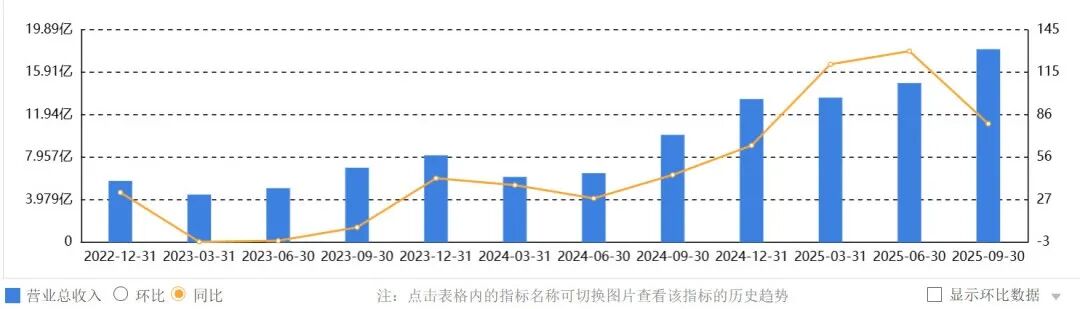
In the first three quarters of this year, the company’s distribution business recorded a revenue of 4.416 billion yuan, representing a year-on-year surge of 119.64%. Among this figure, the consolidated Winsupply Group contributed 1.591 billion yuan in sales revenue. Excluding this portion, the revenue of the company’s original distribution business stood at 2.825 billion yuan, with a year-on-year growth of 57.50%.
The automotive electronics segment maintained steady growth in the first three quarters of the year. In terms of intelligent driving and the three-electric systems, the company’s products have delivered a marked incremental contribution. Meanwhile, the company’s AI-related business achieved a revenue of 515 million yuan, realizing a large-scale leap from zero to one year-on-year, with strong growth momentum and a quarter-on-quarter increase of over 150%. Among this, AI memory products accounted for more than 60% of the total AI business revenue. As stated in Yachuang Electronics’ 2025 interim report, the company has obtained the distribution rights for AI memory chips produced by YMTC and CXMT.
Yatron Electronics has achieved continuous growth for three consecutive years from 2022 to 2024, with revenue in the first three quarters of this year reaching 4.416 billion yuan, surpassing the full-year 2024 figure (3.61 billion yuan).
Acquisitions have been a key strategy for Yatron Electronics to expand and deepen its business. From 2022 to 2024, the company acquired a controlling stake in Shenzhen YiHaiNengDa, expanding its distribution business for passive components such as Murata products. It also gained full control of WEC to accelerate its overseas expansion, and secured a controlling stake in Weili Group, obtaining distribution rights for European and American chip brands like ST and further expanding its automotive electronics business scope.
Source: Eastmoney.com
Intang Intelligent Control: Storage Business Grows Rapidly
Yutong Intelligence Control primarily operates two main businesses: electronic distribution (accounting for 91.31%) and chip design and manufacturing (accounting for 8.14%). Its authorized distribution brands mainly include Panasonic, Rohm, Synaptics, Samsung, Silergy, OmniVision, among others.
In the first three quarters of 2025, the company’s electronic component distribution business achieved revenue of 3.773 billion yuan, representing a year-on-year increase of 2.72%. By accurately capturing market opportunities, the company’s memory business achieved rapid growth compared to the same period last year. With the development of emerging technologies such as 5G, AI, and cloud computing, the demand for memory chips continues to rise. The company has seized this opportunity to further consolidate its industry position in the electronic component distribution market.
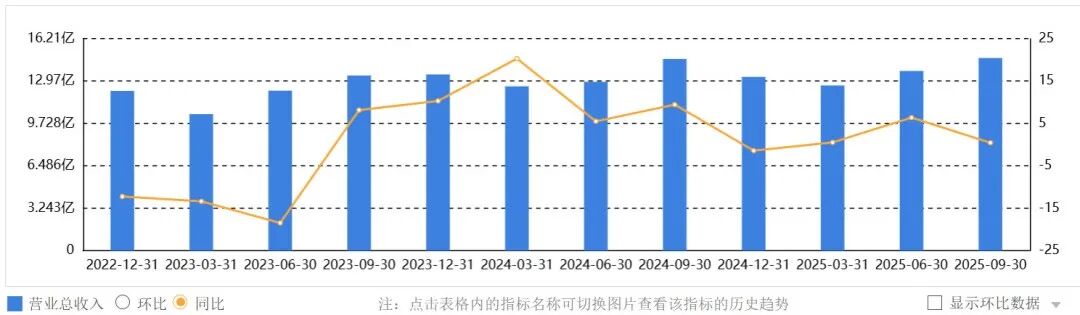
In recent years, the company's performance has experienced significant fluctuations. From 2021 to 2023, its revenue was 6.338 billion yuan, 5.169 billion yuan, and 4.958 billion yuan, representing year-on-year declines of 39.16%, 18.45%, and 4.07%, respectively. During the same period, its net profit attributable to shareholders was 28.8223 million yuan, 57.2719 million yuan, and 54.8762 million yuan, with year-on-year changes of -89.28%, 98.71%, and -4.55%, respectively. By 2024, revenue rebounded, increasing by 7.83% year-on-year to 5.346 billion yuan, while net profit attributable to shareholders reached 60.2749 million yuan, marking a year-on-year growth of 9.84%.


 Whatsapp
 Email
Email Skype
Skype